


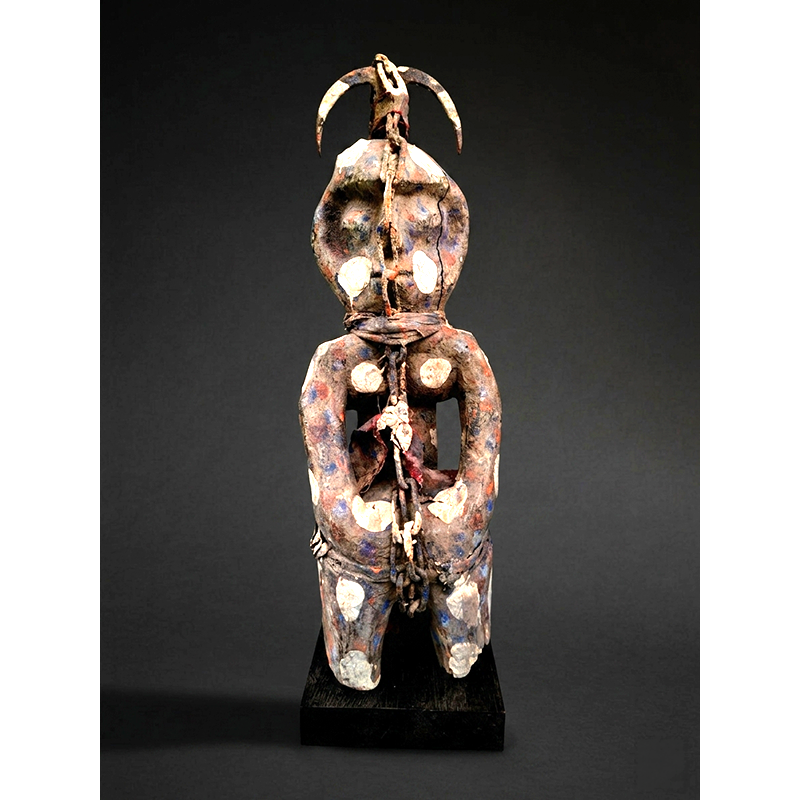


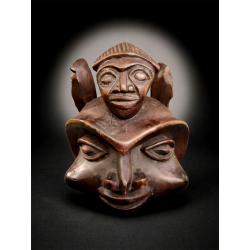
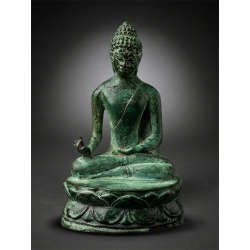
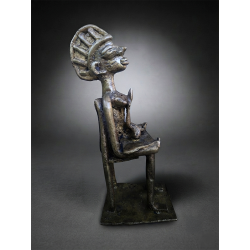
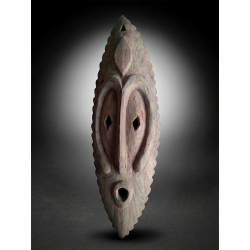
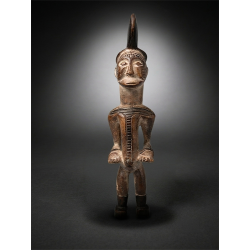
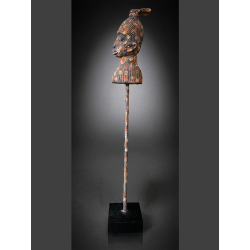
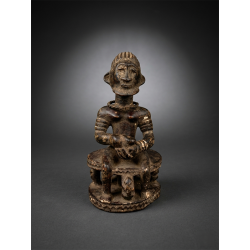
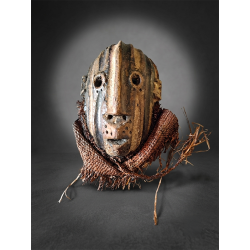
This commanding figure belongs to the bòcio tradition of the Fon people of the Abomey plateau and surrounding coastal Bight of Benin region — the heartland of the historical Kingdom of Dahomey (c. 1625–1894). Bòcio — from bó (empowered object) and cio (activated vessel) — are ontological agents, not mere representations. Stylistically and materially, this figure is consistent with production from the late 19th to early 20th century (c. 1880–1930). The iron hardware exhibits a deep, layered rust patina consistent with 80–130 years of oxidation. The sacrificial encrustation at the chest cavity is hardened, amalgamated with the wood substrate, and carries no signs of artificial ageing.
In Fon Vodoun cosmology, bòcio figures serve as active, inhabited objects of protection and spiritual contract. Prepared by a bokonon or vodounon, the figure is activated through the drilling of the chest cavity to receive bó ingredients and bound with iron to constrain, amplify, and direct power. The circular white kaolin spots (pemba) covering the surface mark points of spiritual reinforcement. The twin curved iron horns crowning the head signify aggressive-protective intent — the figure is both shield and weapon. The cavity in the torso retains organic residue consistent with charged bó medicine packets, a significant indicator of genuine ceremonial use.
The wooden core is carved from a dense local hardwood — likely iroko — using an adze-finished technique. The form is compact and forceful, with a large, ovoid head on a short neck and arms pressed to the sides. The body was polychromed in successive layers, delivering a stratigraphy that speaks to reactivation over decades. Iron components were added by a smithing specialist, as is typical of high-grade Fon bòcio where the collaboration between carver, smith, and diviner produces the finished power object.
Overall: Good, fully intact. The wooden core is structurally sound with natural vertical drying cracks. All iron elements are present and in situ. The kaolin spots retain excellent relief, and the sacrificial encrustation is entirely intact and adherent. No elements of restoration, in-painting, or stabilizing consolidants have been detected. The piece is museum-grade.
Fon bòcio figures of demonstrable age and ceremonial use are increasingly sought after. The combination of exceptional polychrome preservation, an intact charged cavity, a complete iron armature, and a plausible pre-1930 dating places this figure in the upper tier of what the open market offers. This is a fully activated, ritually coherent object that carries a genuine Vodoun spiritual biography — a rarity in a category heavily polluted by tourist-grade production.
 Security policy
Transactions protected by 256-bit SSL through 3D-Secure gateways—we never store your card details.
 Delivery policy
All items are professionally packed and shipped via premium, fully tracked carrier services.
 Return policy
If you are not entirely satisfied, you can return your acquisition within 15 days for a full refund.
Data sheet
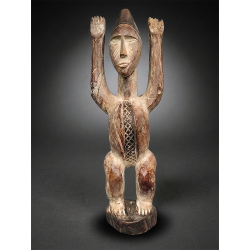
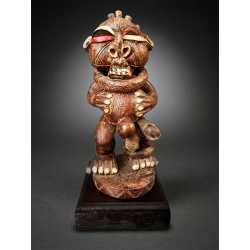
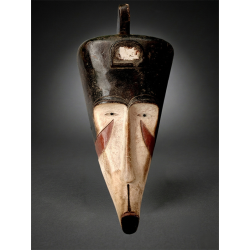
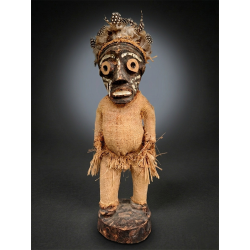
This commanding figure belongs to the bòcio tradition of the Fon people of the Abomey plateau and surrounding coastal Bight of Benin region — the heartland of the historical Kingdom of Dahomey (c. 1625–1894). Bòcio — from bó (empowered object) and cio (activated vessel) — are ontological agents, not mere representations. Stylistically and materially, this figure is consistent with production from the late 19th to early 20th century (c. 1880–1930). The iron hardware exhibits a deep, layered rust patina consistent with 80–130 years of oxidation. The sacrificial encrustation at the chest cavity is hardened, amalgamated with the wood substrate, and carries no signs of artificial ageing.
In Fon Vodoun cosmology, bòcio figures serve as active, inhabited objects of protection and spiritual contract. Prepared by a bokonon or vodounon, the figure is activated through the drilling of the chest cavity to receive bó ingredients and bound with iron to constrain, amplify, and direct power. The circular white kaolin spots (pemba) covering the surface mark points of spiritual reinforcement. The twin curved iron horns crowning the head signify aggressive-protective intent — the figure is both shield and weapon. The cavity in the torso retains organic residue consistent with charged bó medicine packets, a significant indicator of genuine ceremonial use.
The wooden core is carved from a dense local hardwood — likely iroko — using an adze-finished technique. The form is compact and forceful, with a large, ovoid head on a short neck and arms pressed to the sides. The body was polychromed in successive layers, delivering a stratigraphy that speaks to reactivation over decades. Iron components were added by a smithing specialist, as is typical of high-grade Fon bòcio where the collaboration between carver, smith, and diviner produces the finished power object.
Overall: Good, fully intact. The wooden core is structurally sound with natural vertical drying cracks. All iron elements are present and in situ. The kaolin spots retain excellent relief, and the sacrificial encrustation is entirely intact and adherent. No elements of restoration, in-painting, or stabilizing consolidants have been detected. The piece is museum-grade.
Fon bòcio figures of demonstrable age and ceremonial use are increasingly sought after. The combination of exceptional polychrome preservation, an intact charged cavity, a complete iron armature, and a plausible pre-1930 dating places this figure in the upper tier of what the open market offers. This is a fully activated, ritually coherent object that carries a genuine Vodoun spiritual biography — a rarity in a category heavily polluted by tourist-grade production.