




In the entire universe of West African metalwork, nothing combines sculptural invention, narrative density, and material prestige with more concentrated elegance than the Akan figural goldweight — the abrammuo. These three miniature bronzes, each no taller than six centimetres, contain entire worlds.
"A goldweight is not merely a measure of gold. It is a measure of everything — of worth, of wisdom, of the stories a man carries in his hand."
Figural goldweights — abrammuo depicting human figures engaged in specific activities — are the rarest and most sought-after category within the typology. They were cast using the lost-wax (cire perdue) technique, with each figure modeled in beeswax, invested in clay, fired, and cast in a single brass or bronze pour.
The resulting objects are extraordinarily precise at miniature scale: joint articulation, facial scarification, clothing details, and the specific attributes of each figure's activity are all rendered with a confidence and economy that speaks to masters working in a fully mature tradition.
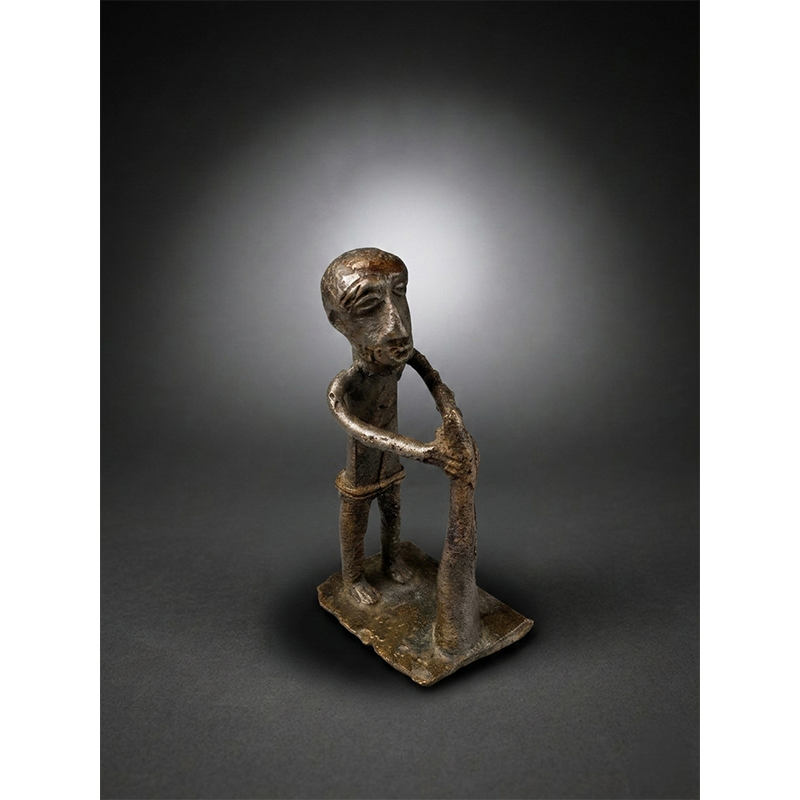
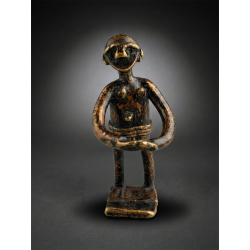
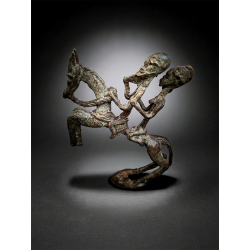
This remarkable Akan gold weight (abrammuo), meticulously captured in Akan Gold Weight.jpg and Akan Gold Weight front.jpg, stands as a masterpiece of West African miniature sculpture. It depicts a standing male figure dynamically engaged in an essential domestic and proverbial act: pounding fufu or grain with a massive pestle inside a deeply hollowed mortar.
In Akan society, every figurative weight was directly tied to a visual proverb (Abebu sem), giving the weight a dual purpose as both a precise economic counterweight and an intellectual communicative tool during trade negotiations. The theme of a man pounding food usually communicates themes of industry, community interdependence, and the fair distribution of labor; a well-known Akan maxim declares, "He who labors at the mortar deserves to partake in the meal."
The casting choice demonstrates superb mid-period stylistic mastery. The figure's anatomy is beautifully stylized with long, columnar limbs, a robust torso, and an oversized, expressive head that captures a meditative focus. The subtle tilt of the head seen in Akan Gold Weight b.jpg highlights the master caster’s talent for injecting expressive life into small-scale bronze alloys. Decades of direct manual interaction during commercial transactions have blessed the metal with a smooth, glossy, rich olive-brown patina that machine-made reproductions can never successfully recreate.
Historically, gold weights were the cornerstone of the highly sophisticated Akan economic infrastructure, which relied entirely on gold dust (Sika futuro) as its currency from the 15th through the late 19th centuries. Merchants, chiefs, and state treasurers owned individual weight sets kept in personal leather or cloth treasury bundles called a Dja.
While gold weights served a direct fiscal purpose, they operated within a deeply spiritual and sacred framework. For the Akan, gold was not just a symbol of status; it was considered the physical, earthly crystallization of the sun's life force and the vehicle for the human soul (Kra). The process of weighing gold dust was treated with immense care, as it maintained balance and spiritual honesty across the earthly kingdom.
Possession of complex, beautifully sculpted figurative weights like this one demonstrated a merchant’s cultural literacy, command over proverbial wisdom, and alignment with state spiritual values. The introduction of European currency and the subsequent British ban on gold dust trade in 1896 marked the end of active production for these weights, confirming that this piece dates securely to the golden era of independent Akan commerce.
While gold weights primarily functioned within the commercial sphere for weighing gold dust, their imagery tied them directly to the spiritual and social governance of Akan society. The depiction of a figure pounding a mortar carries a dual meaning:
As an object intimately tied to gold—which the Akan viewed as the earthly embodiment of the sun and life force (kra)—the weight itself was treated with deep respect, carrying the spiritual residue of the marketplace and ancestral wealth.
Excellent, collector-grade condition. The metal exhibits an authentic, deep chocolate-brown and olive-toned oily patina, consistent with centuries of handling, storage in leather pouches (asotoa), and interaction with organic materials and skin oils. Minimal surface oxidization in recessed areas underscores its undeniable age.
For the connoisseur of African art, this piece offers an entry point into a revered tradition of African metallurgy. Its appeal is rooted in four key criteria:
Akan figural goldweights are among the most universally admired objects in the global tribal art market — small enough to hold in the palm, complex enough to sustain a lifetime of study. Their scale makes them ideal for cabinet collections, display cases, and scholarly presentations; their iconographic richness rewards the collector who takes time to read them.
 Security policy
Transactions protected by 256-bit SSL through 3D-Secure gateways—we never store your card details.
 Delivery policy
All items are professionally packed and shipped via premium, fully tracked carrier services.
 Return policy
If you are not entirely satisfied, you can return your acquisition within 15 days for a full refund.
Data sheet
In the entire universe of West African metalwork, nothing combines sculptural invention, narrative density, and material prestige with more concentrated elegance than the Akan figural goldweight — the abrammuo. These three miniature bronzes, each no taller than six centimetres, contain entire worlds.
"A goldweight is not merely a measure of gold. It is a measure of everything — of worth, of wisdom, of the stories a man carries in his hand."
Figural goldweights — abrammuo depicting human figures engaged in specific activities — are the rarest and most sought-after category within the typology. They were cast using the lost-wax (cire perdue) technique, with each figure modeled in beeswax, invested in clay, fired, and cast in a single brass or bronze pour.
The resulting objects are extraordinarily precise at miniature scale: joint articulation, facial scarification, clothing details, and the specific attributes of each figure's activity are all rendered with a confidence and economy that speaks to masters working in a fully mature tradition.
This remarkable Akan gold weight (abrammuo), meticulously captured in Akan Gold Weight.jpg and Akan Gold Weight front.jpg, stands as a masterpiece of West African miniature sculpture. It depicts a standing male figure dynamically engaged in an essential domestic and proverbial act: pounding fufu or grain with a massive pestle inside a deeply hollowed mortar.
In Akan society, every figurative weight was directly tied to a visual proverb (Abebu sem), giving the weight a dual purpose as both a precise economic counterweight and an intellectual communicative tool during trade negotiations. The theme of a man pounding food usually communicates themes of industry, community interdependence, and the fair distribution of labor; a well-known Akan maxim declares, "He who labors at the mortar deserves to partake in the meal."
The casting choice demonstrates superb mid-period stylistic mastery. The figure's anatomy is beautifully stylized with long, columnar limbs, a robust torso, and an oversized, expressive head that captures a meditative focus. The subtle tilt of the head seen in Akan Gold Weight b.jpg highlights the master caster’s talent for injecting expressive life into small-scale bronze alloys. Decades of direct manual interaction during commercial transactions have blessed the metal with a smooth, glossy, rich olive-brown patina that machine-made reproductions can never successfully recreate.
Historically, gold weights were the cornerstone of the highly sophisticated Akan economic infrastructure, which relied entirely on gold dust (Sika futuro) as its currency from the 15th through the late 19th centuries. Merchants, chiefs, and state treasurers owned individual weight sets kept in personal leather or cloth treasury bundles called a Dja.
While gold weights served a direct fiscal purpose, they operated within a deeply spiritual and sacred framework. For the Akan, gold was not just a symbol of status; it was considered the physical, earthly crystallization of the sun's life force and the vehicle for the human soul (Kra). The process of weighing gold dust was treated with immense care, as it maintained balance and spiritual honesty across the earthly kingdom.
Possession of complex, beautifully sculpted figurative weights like this one demonstrated a merchant’s cultural literacy, command over proverbial wisdom, and alignment with state spiritual values. The introduction of European currency and the subsequent British ban on gold dust trade in 1896 marked the end of active production for these weights, confirming that this piece dates securely to the golden era of independent Akan commerce.
While gold weights primarily functioned within the commercial sphere for weighing gold dust, their imagery tied them directly to the spiritual and social governance of Akan society. The depiction of a figure pounding a mortar carries a dual meaning:
As an object intimately tied to gold—which the Akan viewed as the earthly embodiment of the sun and life force (kra)—the weight itself was treated with deep respect, carrying the spiritual residue of the marketplace and ancestral wealth.
Excellent, collector-grade condition. The metal exhibits an authentic, deep chocolate-brown and olive-toned oily patina, consistent with centuries of handling, storage in leather pouches (asotoa), and interaction with organic materials and skin oils. Minimal surface oxidization in recessed areas underscores its undeniable age.
For the connoisseur of African art, this piece offers an entry point into a revered tradition of African metallurgy. Its appeal is rooted in four key criteria:
Akan figural goldweights are among the most universally admired objects in the global tribal art market — small enough to hold in the palm, complex enough to sustain a lifetime of study. Their scale makes them ideal for cabinet collections, display cases, and scholarly presentations; their iconographic richness rewards the collector who takes time to read them.